
Downsides of Infrared Saunas: 38 Detox Claims, Zero PubMed Studies

Key Takeaways
- A published audit found 47 detox claims across the first 10 Google results, all from spas, retailers, or media sites, while a PubMed search found zero studies on infrared sauna skin benefits or safety.
- The famous sauna statistics (77% lower cardiovascular risk, 22% lower dementia risk) come from traditional Finnish sauna cohorts, not infrared, and can't be assumed to transfer.
- Infrared saunas run 120-140°F air with heating elements up to 150-195°F, so a first session feels milder than expected and that's by design, not a defect.
Here's the thing nobody tells you before your first infrared sauna session: the scary stuff is mostly wrong, and the boring stuff is where the real problems live. You've probably seen the claims. Sweat out the toxins, melt away inflammation, fix your skin. Meanwhile, the actual downsides of infrared saunas are quieter and stranger: most of the big benefit numbers circulating online come from a different type of sauna entirely, a PubMed search turns up zero studies on infrared sauna skin benefits or safety, and the thing that might burn you isn't radiation. It's a heating element pressed against your leg in a sauna blanket, or a garage that's four degrees colder than the brochure assumed.
And the market is booming anyway. Google search interest in infrared saunas grew more than five-fold (roughly 500%) between 2004 and 2023, spreading from just 16 states to all 50 plus Washington, D.C. Search interest in "infrared sauna safety"? There's no trend line for it at all. Mayo Clinic has stated that no harmful effects have been reported from infrared saunas, and that's true as far as it goes, but it needs qualifying against the risks that are documented. This piece separates the two.
How infrared saunas heat you, and why they feel milder than you expect
Infrared saunas feel milder than traditional ones because they heat your body directly while the air stays around 120-140°F, versus 150-195°F (with a minimum of 176°F) in a traditional Finnish sauna. Milder air, though, does not mean a milder workout for your body.
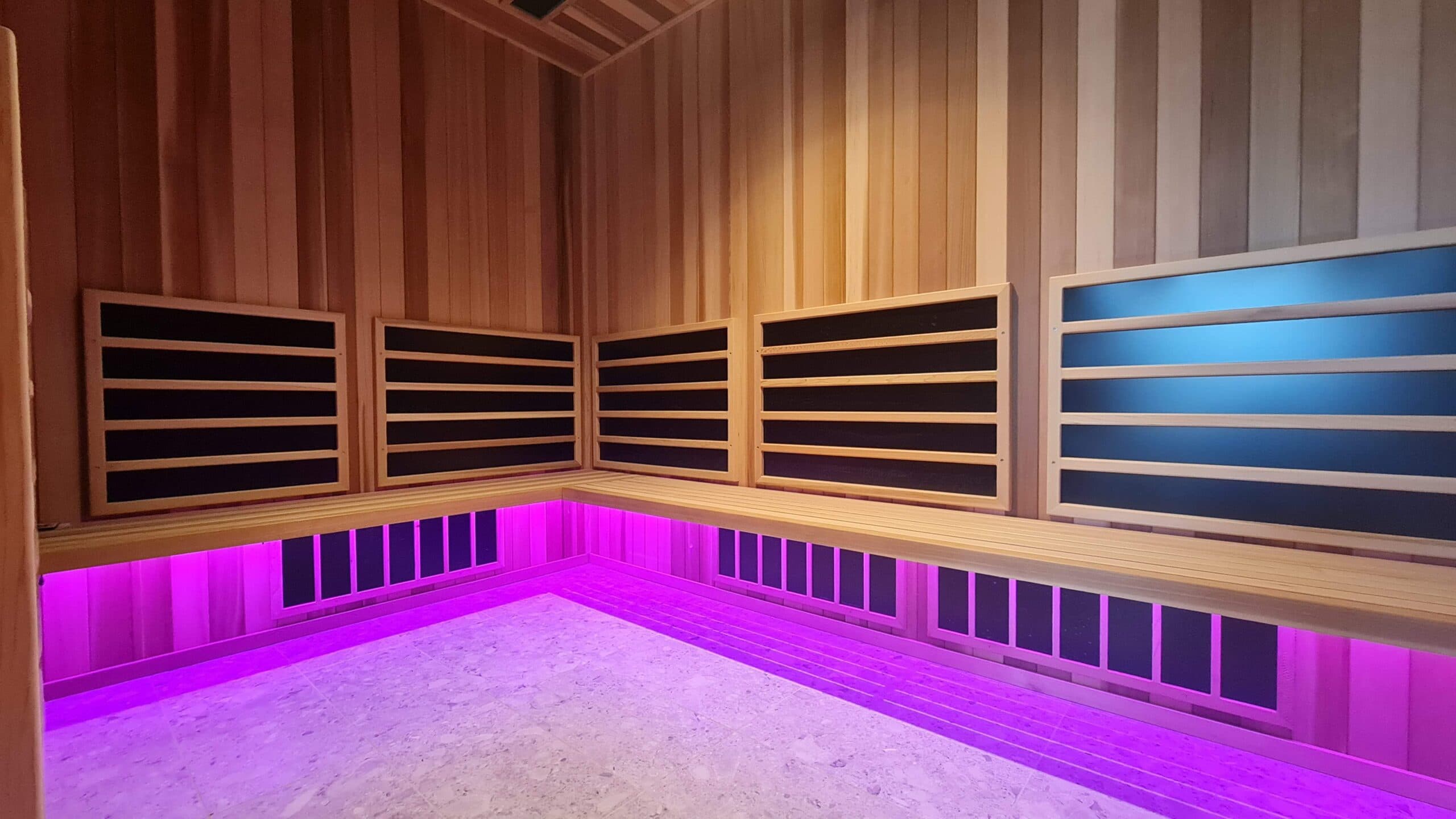
Here's the mechanism without the physics lecture. Infrared light warms your skin and tissue directly without substantially warming the air around you. Dr. Anna Shannahan of Northwestern Medicine has offered two useful analogies: it's like the sun warming your skin on a cool day (minus the harmful UV), or like a microwave heating food rather than the air in the oven. The heating panels themselves often glow soft red and can reach 150-195°F even while the air in the cabin stays far cooler.
Your body still sweats, and your heart rate still rises roughly like it would during moderate exercise. Lower air temperature doesn't lower your heat-stress risk the way people assume it does.
That temperature gap explains a very common first-session reaction: someone who's been in a 180°F traditional sauna steps into a 130°F infrared cabin, waits for the drenching blast of heat, feels a pleasant radiant warmth instead, and concludes the unit is broken. It isn't. That's the design.
It's also where the "is infrared better or worse than traditional" question gets its honest answer: nobody has proven either one better. The strongest health data covers traditional saunas only, which matters a lot once you see where the headline numbers come from (more on that below).
Near, mid, and far infrared: paying premiums for labels research can't rank
Walk into any sauna showroom and you'll hear about near-infrared (0.7-1.4 μm), mid-infrared (1.4-3.0 μm), far-infrared (3.0-100 μm), and "full spectrum" units combining all three. Here's the uncomfortable truth: that's marketing taxonomy, not clinical taxonomy. There's little research establishing whether any subtype is safer or more effective than another, and the published dermatology review on this notes flatly that the data doesn't differentiate the bands. What actually determines whether your sauna experience is safe is much less exotic: sensible temperature control, sensible placement, and your own health status.
Until the research catches up, nobody can honestly justify a spectrum premium with evidence. If someone tells you far-infrared is scientifically superior, ask them for the study. They won't have one.
Quick test: If a seller claims one infrared band is scientifically superior, ask for the study. The published dermatology review says the data doesn't differentiate the bands.
The detox myth: who sells it and why it persists
No. Infrared saunas don't detox your body. Your liver and kidneys do that work, and sweat's actual job is cooling you down. It removes only trace amounts of anything.
The reason the claim won't die is structural, and a published audit made it visible. Researchers running an incognito web search through the first 10 Google results found 38 detox claims, all of them from spas and studios, 5 from sauna retailers, and 4 from media sites. Every single detox claim came from a party with something to sell. Of the 4 medical sources the search surfaced, none claimed evidence-based skin benefits. The same audit counted 23 web claims about skin clarity and 9 about eczema and wound healing, against zero PubMed studies supporting them.
One marketing claim deserves special mention because it sounds so precise: that infrared sweat is roughly 20% toxins versus 3% in traditional sauna sweat. It's a specific-sounding figure, repeated by proponents (including in a promotional YouTube segment), but there's no data behind it. Treat it as a marketing number, not a measurement.
The quick myth sweep: saunas don't detox you, more heat doesn't mean better results, and not all saunas work the same way. Those three corrections dissolve most of the wellness copy on the internet.
What the research actually says about health benefits (spoiler: it's borrowed)
The benefits marketers quote do have a real scientific evidence base. It's just not infrared's evidence base.
Where the big numbers come from
Those headline stats you've seen? The 77% lower cardiovascular risk at 4-7 sessions per week. The 22% lower dementia risk and 20% lower Alzheimer's risk at 2-3 sessions a week. The 25% lower cardiovascular death over 14 years at 2-3 sessions weekly.
The roughly 2,000-man cohort finding lower rates of COPD, asthma, and pneumonia among frequent users. All of them come from Finnish studies of traditional sauna users, and all of them are associations, not proven cause and effect.
That's a real problem for infrared marketing. The obvious question is are infrared saunas safe?, and the honest answer is that nobody can say yet, because wavelengths between 0.7 and 100 μm warming your body directly is a different exposure than sitting in heated air, with no automatic transfer of findings from one to the other. Borrowing the traditional sauna numbers and stapling them to an infrared product is roughly equivalent to citing jogging studies to sell a bike.
What infrared-specific studies show so far
The best infrared-specific evidence summary is still Hussain and Cohen's 2018 review: 40 studies, 3,855 participants, but only 13 randomized controlled trials, many with fewer than 40 people. The review's authors explicitly called for more research into adverse effects, which tells you something about the state of safety data. The tentative infrared-specific findings that do exist, around chronic pain, blood pressure, and rheumatoid arthritis symptoms, come from small, short-term studies, a picture explored further in dry sauna vs infrared health benefits. Infrared heat may help with circulation, relaxation, and joint comfort, but the honest baseline is: unproven. Not proven harmful, not proven helpful.
One more thing worth saying plainly: a sauna complements exercise and medical treatment. It doesn't replace either.
Skin: the cancer fear is unsupported, but a documented condition is real
Erythema ab igne is a documented skin condition caused by chronic exposure to infrared heat: a net-like pattern of skin darkening (hyperpigmentation) that's generally benign and typically fades within months once the heat source goes away. If you notice any persistent skin change, get it looked at in a clinic, because the pattern can mimic other things.
The cancer question
Let's take the fear head-on, because it's the thing people search for most. Infrared radiation is non-ionizing, unlike the UV radiation in sunlight that damages DNA and causes skin cancer. No strong evidence links infrared saunas to cancer, in fact, research points toward infrared sauna skin benefits rather than harm. But "non-ionizing" doesn't mean "incapable of injuring you," and erythema ab igne is the proof that infrared heat can affect your skin. Both things are true at once.
EAI explained
"Toasted skin syndrome," as it's informally known, looks like what it sounds like: a lacy, reddish-brown net appearing on skin that's had repeated, prolonged exposure to a heat source. People historically got it from sitting too close to space heaters or resting laptops on their thighs for years. A sauna used regularly at high heat against bare skin sits squarely in that category. It's uncomfortable to look at and annoying to have, but it's generally benign and usually fades within months after you stop the exposure.
Then there's the honest gap. People search constantly about eye danger from infrared, and the research on eye exposure from saunas is essentially nonexistent, in both directions. That's a gap, not a documented danger. Nobody has shown infrared saunas damage eyes, and nobody has rigorously shown they don't. We'd rather tell you that than invent a reassurance.
Why you feel weird afterward: the real side-effect chain
If you feel lightheaded, headachy, or vaguely "off" after a session, it's almost always fluid and electrolyte loss dropping your blood pressure. It is not toxins leaving your body.
The chain works like this: you sweat out water and electrolytes, your blood volume drops, your blood pressure follows it down, and you get lightheaded, sometimes nauseated, occasionally faint. Add the full inventory of reported side effects and you get dehydration, overheating, dizziness, fainting, low blood pressure, muscle cramps, electrolyte loss, respiratory tract irritation, claustrophobia, and the occasional minor burn. Risk goes up with prolonged sessions, excessive heat, and alcohol.
Now the darkly funny part: the wellness industry has relabeled this exact physiology as "the detox working." In reality, that dizzy, wrung-out feeling is your cardiovascular system signaling that it ran low on fluid, not evidence that anything was purified. Staying hydrated before, during, and after a session makes these so-called detox symptoms mostly vanish.
Red flag: Dizziness or nausea after a session means fluid and electrolyte loss, not detox. Hydrate before, during, and after, and stop if you feel unwell.
Who should not use one: contraindications, medications, and the fertility signal
The key frame here is that sauna risk is person-specific, not device-specific. The same cabin is a pleasant 25 minutes for a healthy adult and a genuine hazard for someone on diuretics, and understanding infrared sauna side effects and safety matters most for those groups. Medical clearance is advised before using an infrared sauna if any of these apply to you:
- Pregnancy (heat exposure is linked to central nervous system birth defects such as spina bifida)
- Unstable coronary artery disease
- Decompensated or poorly controlled heart failure
- Significant heart valve disease
- Arrhythmias (abnormal heart rhythms)
- Low blood pressure, orthostatic hypotension, or a history of fainting
- Kidney disease
- A recent heart attack or stroke
- Recent surgery, open wounds, active infection, or fever
- Neuropathy, impaired mobility, or reduced heat perception
Medications count too: diuretics, blood pressure drugs, and sedatives, along with anything else that affects thermoregulation or sweating, change how your body handles heat. If you're on one and unsure, ask your doctor. That's a two-minute conversation that resolves the whole question.
Fertility
A 2013 study put 10 men in a traditional Finnish sauna twice a week for three months and found significantly reduced sperm count and motility. Say what it showed, and what it didn't: the sample was tiny, and it studied traditional saunas, not infrared. It's a heat-exposure signal, not an infrared verdict. But if you're a man actively trying to conceive, repeated heat exposure of any kind is worth a conversation with your physician first.
Blankets, EMF labels, and wiring: risk changes with the product and the install
Infrared sauna EMF emissions are governed by EMS (electromagnetic safety) standards, but "low EMF" itself is a marketing claim, not a regulated one. If EMF is your worry, look for actual electrical safety certification, not a sticker on the product page saying "low EMF." Independent verification data is limited, which is exactly why the certification matters more than the adjective.
Blankets vs. cabins
Sauna blankets are riskier than cabins, categorically. Their heating elements sit directly against your skin at higher temperatures than a cabin runs, and you're completely enclosed, so you can't easily read your body's overheating cues, and you can't get out quickly if you need to. If you use one, you want an automatic shutoff, safety certification, and clear operating instructions, and you should check the surface temperature during use. Anyone with limited mobility or reduced sensation, including anyone who might struggle to open the blanket, shouldn't use one at all.
And note: there's no evidence the full-body sauna effects apply to blankets or portable devices like face masks. Those products borrow cabin research too. No brand call-outs here; the category itself carries the risk.
Electrical requirements
Follow the manufacturer's instructions, and keep the equipment dry, always. A cabin needs to be installed on its own dedicated circuit wired by a licensed electrician; we break down what that involves in our guide to infrared sauna electrical requirements. On the EMF side, the design approach can genuinely differ between products: at SaunaCloud, our VantaWave heaters are a low-EMF design, which is the honest way to address the concern, at the engineering level rather than the label level. No infrared sauna is a "zero EMF" device, and any company claiming otherwise is telling you something about their marketing department.
The garage problem: heat output, warm-up, and placement downsides nobody covers
Here's the section the medical sites can't write, because it comes from our side of the counter. At SaunaCloud, we've handled 3,000-plus installations (and hold the #1 spot on Trustpilot with an A+ BBB rating, which is why it should mean something when a manufacturer owns up to its own product's cons). And the most common regret we see isn't safety. It's placement.
Put an infrared sauna in a garage without insulation where winters run cold, and the heaters spend the first stretch of every session fighting the ambient cold instead of heating you. Warm-up drags noticeably, and the advertised temperatures get hard to hold in winter. The cabin isn't underpowered; it's doing two jobs, and one of them is warming a concrete box. If you're weighing garage placement, we've written a full walkthrough of whether you can put an infrared sauna in an uninsulated garage and what fixes it cheaply.
The second disappointment is the temperature expectation problem from earlier in this article. A 120-140°F peak air temperature delivers a fundamentally different session than the 150-195°F traditional experience most buyers are picturing when they purchase. Some people love the gentler radiant heat once they understand it. Some people don't, and no amount of marketing changes that.
One more garage constraint worth repeating: that dedicated-circuit requirement is real, and it's the single most common logistical snag in a garage install. The broader placement question, including power, ventilation, and moisture, is covered in our guide on putting an infrared sauna in your garage.
As for home versus spa: at home you get convenience, regular use, and a one-time cost. At a spa you skip the equipment purchase, get bigger saunas, and can try the experience before committing thousands of dollars. Neither is universally better. It depends on your lifestyle, your space, and your budget, and honestly, trying before you buy answers the temperature-expectation question better than any spec sheet.
Using one safely: the titration protocol
Begin with 5-10 minutes in gently heated conditions, then build up in 5-10 minute increments as your body adapts. Typical use is 15-30 minutes per session, 2-4 times a week, which is enough to break a sweat without pushing into dehydration territory (most studies used about 15 minutes). Around 45 minutes is a reasonable daily maximum, so yes, daily use is fine within that cap. Hydrate before, during, and after, and skip the alcohol: it raises both dehydration risk and the risk of abnormal heart rhythms. Stop if you feel unwell. That's not a disclaimer; that's the instruction.
Shorter, more frequent sessions beat long, infrequent ones. Dr. Shannahan's advice on this is worth borrowing directly: to maximize benefits while avoiding dehydration, she recommends shorter sessions more frequently rather than longer sessions less often.
One honesty note: sources conflict on the upper end. A promotional YouTube segment has reported 40-minute infrared sessions, which is well past what the clinical literature generally supports, especially for beginners. Treat it as the outlier it is.
The honest close: what nobody knows yet
No. There are no proven long-term side effects of regular infrared sauna use, because long-term infrared-specific studies don't exist. That's not a dodge; it's the actual finding. Within moderation, infrared saunas appear likely safe for healthy adults, but "likely safe" is not the same as "entirely safe," and they shouldn't be used as a medical treatment.
Even the Mayo Clinic statement that no harmful effects have been reported needs qualifying against the documented record: erythema ab igne is real, dehydration is real, and there's a fertility signal from a small traditional-sauna study. Trusted sources overgeneralize in both directions here, painting infrared as either a medical device or a hazard. It's neither.
So, calibrated and final: generally safe in moderation for healthy adults, with real documented short-term risks, marketing claims that outrun the evidence by a wide margin, and an honest answer to the long-term questions that amounts to "nobody knows yet." A sauna is a pleasant complement to exercise and medical care, never a replacement for either. That's the whole pitch, and it's the one nobody's selling.
Frequently Asked Questions
What is the healthiest sauna type?
Nobody has proven one type healthier than the other. The famous statistics, 77% lower cardiovascular risk, 22% lower dementia risk, come from Finnish studies of traditional saunas, not infrared, and can't be assumed to transfer. Infrared-specific evidence is thinner and tentatively points to benefits for chronic pain, blood pressure, and rheumatoid arthritis symptoms, but from small, short-term studies.
What toxins does an infrared sauna remove?
Essentially none in any meaningful amount. Your liver and kidneys do detoxing, and sweat's job is cooling you down, it removes only trace amounts of anything. The specific claim that infrared sweat is 20% toxins versus 3% in traditional sauna sweat is a marketing figure with no data behind it.
Is it okay to sit in an infrared sauna every day?
Yes, within limits. Daily use is fine with a reasonable daily maximum around 45 minutes, though typical use is 15-30 minutes per session, 2-4 times per week. Shorter, more frequent sessions beat long, infrequent ones, and you should hydrate before, during, and after while skipping alcohol.
Can infrared saunas cause cancer or is the radiation harmful?
No strong evidence links infrared saunas to cancer. Infrared radiation is non-ionizing, unlike the UV in sunlight that damages DNA and causes skin cancer. But non-ionizing doesn't mean incapable of harming you, chronic infrared heat exposure can cause erythema ab igne, a generally benign net-like skin darkening that typically fades within months once exposure stops.
What is erythema ab igne and can infrared saunas damage your skin?
Erythema ab igne, informally called toasted skin syndrome, is a lacy, reddish-brown net-like skin darkening caused by repeated, prolonged exposure to a heat source, historically from space heaters or laptops resting on thighs. It's generally benign and usually fades within months after the exposure stops. Saunas used regularly at high heat against bare skin fall squarely into the risk category, and any persistent skin change should be checked at a clinic.
Who should not use an infrared sauna, pregnancy, heart conditions, or medications?
Medical clearance is advised if you're pregnant (heat exposure is linked to birth defects like spina bifida), have unstable coronary artery disease, uncontrolled heart failure, significant valve disease, arrhythmias, low blood pressure or a fainting history, kidney disease, a recent heart attack or stroke, recent surgery, or reduced heat perception. Medications matter too, diuretics, blood pressure drugs, and sedatives change how your body handles heat. A two-minute conversation with your doctor resolves the question.
Do infrared saunas really detox your body or is that a myth?
It's a myth. An audit of the first 10 Google results found 47 detox claims, every one from spas, retailers, or media sites with something to sell, while a PubMed search turned up zero supporting studies. The dizzy, wrung-out feeling marketers call the detox working is actually fluid and electrolyte loss, and hydration makes it mostly disappear.
Why does my infrared sauna feel less hot than expected?
That's by design, not a defect. Infrared saunas heat your body directly with radiant energy while the air stays around 120-140°F, versus the 150-195°F air in a traditional Finnish sauna. Your heart rate and sweat response still rise roughly like moderate exercise, lower air temperature doesn't lower heat-stress risk the way people assume.

Founder & Lead Designer, SaunaCloud®
3,000+ custom saunas built since 2014 · Author of The Definitive Guide to Infrared Saunas · Featured in Forbes, Inc., and MSN
Chris has been designing and building custom infrared saunas since 2014. He wrote one of the first comprehensive books on infrared sauna therapy and is personally involved in every SaunaCloud build — from design consultation through delivery and beyond. His professional expertise is sauna design and construction, not clinical medicine.
Continue Reading



Ready to Design Your Sauna?
Every project starts with a conversation. Tell us about your space and we'll create your custom plan — free, no obligation.