
Outdoor Infrared Sauna vs Indoor Garage Sauna: Voltage, Cost, and Weather Math That Actually Decides It
Key Takeaways
- Check electrical requirements first. The examples below include a $6,799 indoor infrared cabin on 120V and outdoor-capable units at $11,599, $12,990, and $5,699 that require 240V. Placement alone does not determine voltage; check the exact unit before ordering.
- If you are considering an indoor-rated sauna in a sheltered outdoor location, overhang depth matters. One installation example treats 1 foot as inadequate and 4 feet as better, with roughly 2.5 feet of rain blow-in even then, plus at least 6 feet of setback from a lanai’s open edge. These are example dimensions, not a substitute for the manufacturer’s placement requirements.
- Capacity labels can overstate comfortable seating. Fortune’s tester Ellie, who is 6'1", found that one sauna advertised for 4-5 people realistically seated 3. Measure the footprint, door swing, and garage-door clearance before relying on a spec sheet.
If you've got a garage and a sauna dream, the labels on the product pages aren't going to settle it for you. Choosing between an outdoor infrared sauna and one kept in a garage isn't really an indoor-versus-outdoor choice; it's an environmental and electrical one. Indoor gives you convenience, a controlled environment, and lower cost, plus a unit that lasts longer because weather never touches it. Outdoor models cost more, and the premium buys immersion, room for friends, easier venting, and design freedom.
Then there's the garage, which is neither one cleanly: a finished, conditioned garage acts like a spare room, while a cold-weather uninsulated garage acts like the backyard. That insulation state, more than any label on the box, decides which experience you're actually buying.
Is a garage too cold for an infrared sauna? The honest answer
It depends on your garage. If it's finished and conditioned like the rest of your house, you're fine. If it's uninsulated and you live somewhere with real winters, yes, the sauna will struggle.
Here’s the mechanism. A cold, drafty enclosure drains heat away and slows your warm-up time. Damaged or inadequate insulation makes cold or windy conditions harder on the sauna, while a conditioned indoor space offers more stable surroundings. You wouldn’t expect your car to warm up as fast with the garage door cracked open in January.
One honest caveat: nobody publishes measured heat-loss numbers for garages, so this is conditional reasoning, not data. If your garage stays above roughly room temperature because it shares a wall with the house or has its own heat, treat it like an indoor install. If it hovers near outdoor temps, plan like you're installing outdoors.
Electrical requirements: the spec that decides before weather does
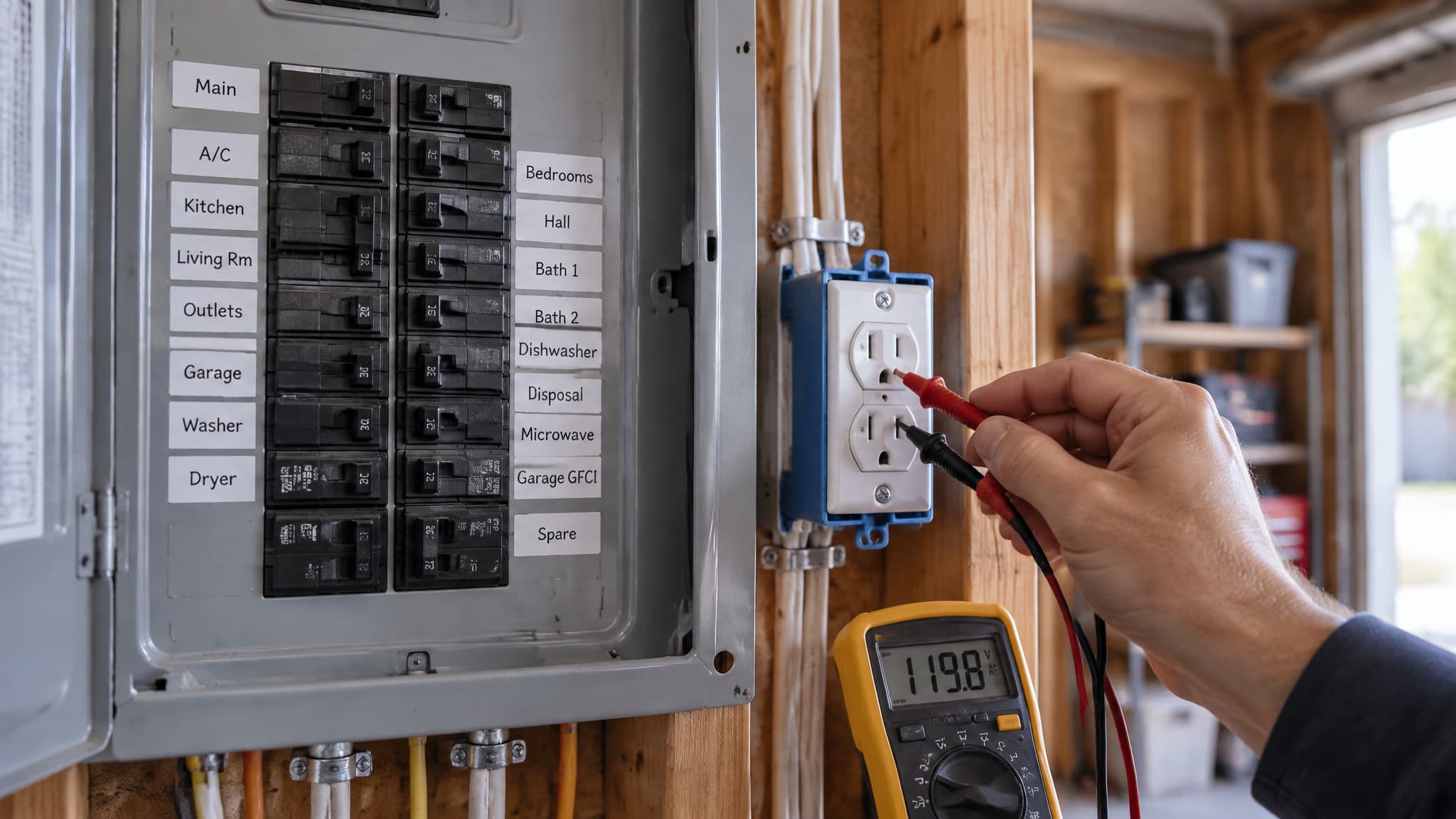
The examples here include indoor infrared units on 120V household power and outdoor-capable units requiring 240V. Check the specific unit’s voltage, amperage, and connection requirements before you check the weather.
120V plug-in models vs 240V hardwired units
Plug-in examples include a $6,799 indoor infrared cabin and a compact two-person cabin, both on 120V, a $349 portable steam kit on a standard 110V outlet, and a $699 infrared blanket on 120V.
The 240V examples include an outdoor infrared cabin at $11,599, a dual-rated Finnish-style sauna at $12,990, and a two-person thermowood sauna at $5,699. Confirm whether each unit requires hardwiring or a dedicated receptacle.
That is roughly a $4,800 price gap between the $6,799 indoor infrared example and the $11,599 outdoor infrared example. They differ in construction and features as well as voltage, so the gap should not be treated as the cost of an electrical upgrade alone.
Dedicated circuits and the 200 rule
Verify the dedicated-circuit requirement before you buy. One buying checklist specifies 110V/20 amps, but the correct circuit depends on the unit. Anything hardwired needs an electrician. A common installation snag is discovering that the sauna needs 240V while the garage only has 120V outlets. Check the panel and speak with an electrician before ordering.
Quick test: Before ordering, check whether your garage has 120V or 240V outlets and whether a dedicated circuit is free — that single look prevents the most common mid-install stall.
You may also run into the "200 rule," a well-known sauna heuristic that calls for roughly 200 square feet of space plus a dedicated circuit. It gets repeated everywhere, but no source I could find confirms its exact regulatory origin, so treat it as folk wisdom with a kernel of practical sense: give the unit breathing room and its own circuit.
Can an infrared sauna go in a garage safely?
Yes, an infrared sauna can go in a garage safely when it has ventilation, a level floor, and adequate power. Those three conditions are the whole checklist.
- Ventilation path. Trapped humidity means mold, and mold means damage to your house, not just the sauna. Be direct with yourself about where the moist air goes.
- Level floor. Most garage slabs qualify, but check before delivery day.
- Circuit capacity. Confirm the exact voltage and amperage requirements, including whether the unit needs a dedicated circuit. If it is hardwired, bring in an electrician.
Garages add a few cautions indoors placement doesn't: humidity swings, dust, and car exhaust and dampness if the space still parks a car. For more on that specific set of problems, see our guide to garage infrared sauna moisture and humidity.
Permits? Here's the honest answer: the source material for these rankings doesn't cover them, and requirements vary by jurisdiction, so check your local code. The universal items, no matter where you live, are circuit verification and an electrician for anything hardwired.
Weatherproofing: when an indoor sauna can't go outside
Yes, outdoor infrared saunas need weatherproofing, and overhang depth decides how much protection they actually get. The geometry numbers, quickly:
- A 1-foot overhang is inadequate.
- A 4-foot overhang is dramatically better, but expect roughly 2.5 feet of rain blow-in even then.
- On a covered lanai, keep the sauna at least 6 feet in from the open edge.
Overhang depth and rain blow-in: the actual numbers
A covered screened-in deck example illustrates why overhang depth matters. Repeated rain wetting can crack and split indoor-rated wood, with damage appearing within a season or two. A 1-foot overhang may look like shelter from a patio chair while leaving the sauna exposed. Four feet offers more protection, though the unit still needs to sit beyond the rain blow-in line. Follow the manufacturer’s placement requirements.
The insulated enclosure workaround
Housing an indoor-rated cabin outside can become a real construction project: an 8x8 insulated framed room around a 4x4 sauna, with a changing area, an optional shower, and an exhaust fan. That is construction scope, not a weekend hack. For an outdoor-rated unit, the basics include a level concrete or gravel foundation and the exterior protection specified by its manufacturer. Venting can also be easier when you are not venting into the house.
This is also your answer for the covered porch and lanai question: yes, it can work, if you respect the 6-foot setback and the overhang numbers above.
Space and sizing: what actually fits in a garage
For small garages, compare actual footprints. Two indoor infrared examples measure 45"L x 40"W x 70"H and 51"L x 46"W x 78"H. Compact outdoor cabins offer another option where their placement requirements can be met, while a $699 infrared blanket takes much less storage space than a cabin.
Stated capacity vs real-world fit
Capacity labels deserve a reality check. Fortune’s tester Ellie, who stands 6'1", found that a sauna advertised for 4-5 people realistically fit 3. GGR also excluded a two-person cabin because of its tight 43-inch bench. Buyers often check exterior dimensions but overlook door swing, garage-door clearance, and bench depth. In a tight garage, those measurements matter as much as the advertised capacity.
Exact footprints of the garage candidates
| Example configuration | Dimensions | Voltage | Price |
| Two-person infrared cabin | 51" x 46" x 78" | 120V | $6,799 |
| Compact infrared cabin | 45" x 40" x 70" | 120V | ~$5,000 (quote) |
| Outdoor infrared cabin | 57" x 52" x 83" | 240V | $11,599 |
| Portable steam kit | 35" x 35" x 74.4" | 110V | $349 |
| Dual-rated Finnish-style sauna | 67" x 60" x 95" | 240V | $12,990 |
Add clearance caveats to every one of those numbers, and do the unglamorous thing: measure height, width, and length before you order. It's the easiest mistake to avoid, and the one I'd personally make, given that my garage has been "one weekend away" from organized since 2021.
Heating performance: manufacturer specs vs measured reality
The measured examples show why specifications need context. Tester Rachel recorded one outdoor infrared cabin reaching 130°F in about 10 minutes and 140°F in about 20. Tester Ryan recorded a two-person thermowood sauna losing about 10°F over a 15-minute session at its maximum setting, after topping out at 130°F. These results describe individual tested units, not every sauna in either category.
The invisible variable in all of those numbers is ambient environment. They were measured in favorable conditions, and a cold, uninsulated garage will slow heat-up and worsen retention. Nobody has published garage-specific numbers, so any precise promise about your garage's warm-up time is a guess. Plan for worse-than-spec and be pleasantly surprised.
On heat type: infrared offers gentler, lower-temperature dry heat suited to longer sessions. Steam feels warmer because of humidity, but infrared reaches higher dry temperatures and is easier to run. Traditional dry saunas run hottest and deliver benefits fastest, and they're more work to operate, weigh an infrared sauna comparison if you're deciding between setups. For context on how seriously to take the health discussion, Fortune's write-up draws on 15 studies spanning 1972 to 2025.
Cost comparison: sticker price vs installed cost
Full home saunas run $3,000-$20,000+; kits run $1,500-$10,000; and the examples in the source rankings span $349 for a portable steam kit to $12,990 for a full-size cabin. But the sticker is only the start of what you will pay.
- Full home saunas: $3,000-$20,000+.
- Sauna kits: $1,500-$10,000.
- Tested field: $349 to $12,990.
Placement adders that break sticker-price comparisons
Compare installed costs as well as purchase prices. In the examples here, a $349 portable steam kit uses a wall outlet, a $6,799 indoor infrared cabin requires a suitable dedicated circuit, and an $11,599 outdoor infrared cabin adds 240V electrical work and foundation preparation. Existing wiring and site conditions decide how much extra work each installation needs. Outdoor placement can also add sealants and ongoing exterior upkeep.
Indoor wins on money, plainly: cheaper to buy, cheaper to run, and it lasts longer because weather never touches it. Either placement can add to your property value, though, so a garage or backyard unit isn't purely an expense. For the full breakdown of outdoor placement costs, see our guide to outdoor infrared sauna pricing and setup.
DIY kits, professional install, and financing
Three paths to ownership. DIY kits save money but cost time and some skill; know yourself before you commit (I know myself, which is why I hire people for anything involving wiring). Professional installation costs more but gets the electrical and structural work done right, which matters most on those two fronts. Financing splits the payments over time instead of one lump sum.
That's a neutral description, not a recommendation. And over the long run, a home sauna can replace spa visits, which is where the real math gets friendlier.
Pros and cons: outdoor infrared vs indoor garage sauna
Outdoor wins on experience and capacity; a conditioned garage wins on cost and convenience; an uninsulated garage inherits the outdoor problems without the outdoor design freedom. Here's the honest tally for all three.
Outdoor pros:
- Easier venting, since you're not venting into your house
- Placement flexibility and a view while you sweat, see this guide to outdoor infrared saunas for setup ideas
- Immersive experience and larger capacity
- Design freedom: barrel sauna or modern cabin, and you can add windows or a plunge tub if you want them.
Outdoor cons:
- Exterior upkeep in cold, corrosive, or windy climates
- Higher upfront cost (weatherproofing, foundation, electrical)
- The infrared-specific catch: damaged insulation undercuts heat benefits once cold or windy weather arrives
Conditioned garage pros:
- Step-in convenience and weather-independent access
- Controlled environment, lower costs, longer unit life
Conditioned garage cons:
- Ventilation around existing fixtures
- Space limits on capacity
Uninsulated garage: all the indoor pros above, plus the outdoor cons. The insulation state is what flips it.
| Cost | Weather care | Electrical | Upkeep | Experience | |
| Outdoor | Highest (unit + 240V + foundation + upkeep) | Essential | Model-dependent; examples use 240V | Exterior: sealants, wood treatment | Immersive, room for friends |
| Conditioned garage | Lowest (mostly unit price) | Minimal | Often 120V plug-in | Mostly humidity checks | Convenient, capacity-limited |
| Uninsulated garage | Indoor price, outdoor behavior | Climate-dependent | Usually 120V | Dust, humidity swings, cold | Slower warm-up, weaker sessions |
Sauna maintenance and placement: what each location demands
Outdoor saunas need a level concrete or gravel foundation, and permit requirements aren't covered by any source here. They vary by jurisdiction, so check your local code rather than trusting a generic answer.
Maintenance splits by placement. Indoors, it's mostly humidity: check for mold and mildew periodically, and dry things out after use. Routine, not scary. Outdoors, it's weather: sealants, exterior wood treatment, waterproofing, the same care any outdoor wood structure demands.
A few habits apply everywhere. Check the heater and electrical connections regularly. Use filtered or soft water to prevent limescale buildup, which keeps your heater working efficiently; that's the tip worth screenshotting. And in a traditional sauna, the bucket and ladle aren't decor. That's how you control humidity.
Wood choice follows climate exposure, not looks. Cedar is durable, affordable, moisture-resistant, and aromatic, but not hypoallergenic. Hemlock is scent-free and the allergy-friendly pick. Aspen is common in European interiors but should be thermo-treated.
Thermowood, heat-treated Scandinavian softwood, is used for its resistance to cracking, warping, mildew, and insects. Other cabins use mahogany, but check the specific wood and any certification claims in the manufacturer’s documentation. Garage-specific concerns include cold-climate freeze risk, dust, and humidity swings.
Comparing sauna configurations for each placement
For a conditioned garage, start with an indoor-rated unit that fits the measured space and available power. A useful example of confusing category labels is a dual-rated, 240V Finnish-style sauna that GGR ranked as an indoor pick and Fortune rated 4/5 in an outdoor infrared roundup. The unit’s heat source and installation specifications matter more than the category heading. The profiles below retain the source article’s prices, dimensions, and test results as individual examples; they are not specifications for every product in a category or current offers.
For credibility, once: GGR tested 30+ saunas and helped roughly 500-550 consumers buy last year, scoring each 1-5 across construction, performance, delivery/installation, maintenance, features, value, customer experience, and reviews, with a performance bar of heating within 35 minutes. The consultation came from Thomas Barbeau, the Carolina Panthers' assistant strength and conditioning coach, with medical review by Dr. Raj Dasgupta.
Two-person full-spectrum infrared cabin example
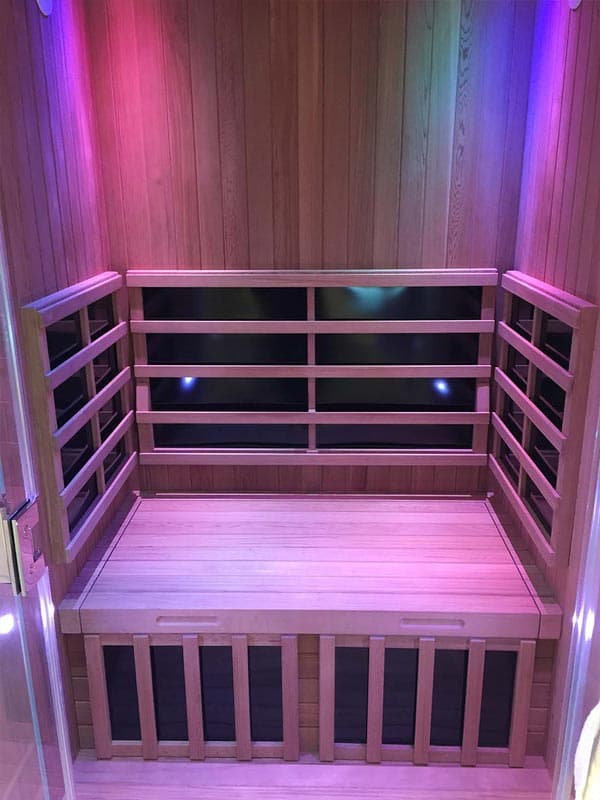
Full-spectrum infrared, which means near, mid, and far infrared in one unit rather than far-only. Specs: 51"L x 46"W x 78"H, max 165°F, seats 2, runs on standard 120V (subject to a suitable existing circuit), warranty described in the source as “7-year limited lifetime”; confirm the actual terms, $6,799 with free shipping worth up to $1,500. Chromotherapy LEDs and Bluetooth surround sound are pleasant extras, not reasons to buy. Check the manufacturer’s garage-placement requirements before ordering.
Infrared cabin with red light example
This cabin combines infrared heat with red light therapy and low-EMF carbon heaters, and uses a plug-in connection, subject to a suitable existing circuit. Specs: 47"L x 43"W x 75"H, max 149°F, 120V, 3-year warranty, $10,199, with a 30% promotion noted in the source. The red-light claims are the vendor's framing; treat it as a feature, not a therapy.
Compact two-person infrared cabin example
45"L x 40"W x 70"H, 120V, full-spectrum with built-in sound and color therapy as comfort extras. Pricing requires a quote, expect around $5,000, which is an honest friction point if you hate quote funnels. The source can't decide on max temp, it lists both 165°F and 170°F, so ask the vendor to confirm before you order.
Dual-rated Finnish-style sauna example
67"L x 60"W x 95"H, max 230°F, claimed at 5 people (7 in the XL), 240V, 5-year warranty, $12,990, with a $1,950 discount noted in the source. It's an electric Finnish-style build rated for indoor or outdoor use, with a slanted back wall and folding benches. Ellie's reality check applies: it realistically seats 3. That 240V line item is an electrician conversation.
Outdoor infrared cabin example
57"L x 52"W x 83"H, max 170°F, 240V, $11,599, with aerospace-grade aluminum outside and red cedar inside, which is how it survives weather. The 5-person version was Fortune's best overall outdoor at 4.5/5. Rachel's hands-on data: 130°F in about 10 minutes, 140°F in about 20, plus a cabin she found big enough to comfortably host several friends. Fortune's cons: pricey, needs dedicated electrical, and too big for small patios.
Two-person thermowood outdoor sauna example
GGR's best outdoor, and Fortune's best outdoor steam at 4/5. Specs: 68.75"L x 50.75"W x 81"H, max 190°F, 2-person, 240V, 1-year warranty, $5,699, in thermowood. Ryan tracked a 10°F drop over a 15-minute session at max, topping out at 130°F, but still concluded it delivered at roughly half a pricier competitor's price. You get what you pay for here, and at $5,699 it's still worth paying for. For genuinely tight spaces, a compact thermowood cabin is the compact outdoor pick.
Portable infrared blanket example
$699, 71"x71", max 175°F, plugs into 120V. Far-infrared heat, portable, for people who travel, rent, or want recovery heat on the go. If your garage can't fit a cabin, this isn't a consolation prize; it's the category that exists precisely for that situation.
Traditional barrel sauna example
72"x72"x78", max 190°F, seats 4, 220V, $8,165, with a 31% discount noted in the source. The barrel shape helps heat circulate evenly, so no cold corners. It works indoors or out, steam or dry, with an electric sauna heater, and carries a limited lifetime warranty with 5 years on heaters.
Portable steam kit example
$349, 35"x35"x74.4", 110V standard plug, 1-person steam, max 130-140°F across 7 settings, folds down, 2-year warranty. It's steam and it's modest, and that's the point: the lowest-commitment way to find out whether daily heat belongs in your life. Nobody's judging the price here.
Budget outdoor sauna example
It scored 3.75/5 overall but only 2/5 on seating, and tester Rachel's take lands why: she described it as basically sitting in a lawn chair. Cheap outdoor heat, with a seat you'll feel.
Fit and performance issues to check
Before buying new or secondhand, check the following details:
- Bench width: a 43-inch bench can leave two adults uncomfortably close, regardless of the advertised capacity.
- Heating performance: a count of six carbon heaters does not tell you whether the cabin reaches a useful temperature. Look for measured results.
- Blanket coverage: check whether the design covers the areas you want warmed, including the shoulders and arms.
- Seated-only designs: make sure you are comfortable with a setup that offers no room to stretch or lie down.
- Similar-looking blankets: compare price, dimensions, and heat settings before assuming one offers more than another.
- Half-dome designs: check entry and exit, usable space, and heating performance before committing.
Two closing checks: confirm whether the exact model is rated for both indoor and outdoor installation, and distinguish vendor descriptions of heater technology and wood species from independently tested performance.
Health benefits and safety: the same either way
Yes, indoor and outdoor infrared saunas deliver the same benefits. Placement changes the infrastructure, not the payoff. Your body can't tell a garage from a backyard. Heat widens your blood vessels either way, so blood moves better and oxygen gets delivered. Sweating helps your body clear things out, honestly stated, without the detox hype.
Sore, stiff muscles loosen. Endorphins lift your mood. Infrared is the gentler heat that penetrates deeper, which is why it suits longer sessions. Fortune's health discussion draws on 15 studies spanning 1972 to 2025, so this is literature-backed, not vibes-backed.
If you've built a garage gym, the sauna is the recovery half of that setup, and the sauna-then-cool-down transition supports circulation and recovery. Vendor claims like collagen boosts are marketing, not established science; you deserve to know which is which.
Safety, said once and said straight: pregnant women, people with heart, blood pressure, or respiratory conditions, a seizure history, or a fever, and young children should skip saunas. Teens should cap sessions at 5-10 minutes. If you're unsure whether it's safe for you, ask your doctor.
The upshot: the health case is identical everywhere, which frees your placement decision to be about what it should be about. Voltage, weather, cost, and space.
Which placement should you choose
Work the checklist in order, and it answers itself.
First, check your circuit and climate. A 120V plug-in unit still needs an outlet and circuit that match its specified amperage and dedicated-circuit requirements. A 220V or 240V unit needs an appropriate supply; plan electrical work with an electrician before ordering.
Second, check whether your garage is finished and insulated. In a conditioned garage, an indoor-rated unit performs as advertised. In an uninsulated one, it's surviving, not performing.
Third, measure the footprint plus door swing and garage-door clearance. Only then pick a model.
If your garage is conditioned and the unit is 120V, the garage wins on cost and convenience. If you want capacity, easier venting, or you live somewhere brutal enough that outdoor upkeep is a constant, the outdoor unit earns its price. The order of those checks is the takeaway; run it top to bottom and the "indoor vs outdoor" question stops being a coin toss.
Frequently Asked Questions
What electrical requirements does a garage or outdoor infrared sauna need?
Garage-friendly units like the Sun Home Equinox run on standard 120V household power, ideally on a dedicated 110v/20 amp circuit. Outdoor-rated models like the Sun Home Luminar, Plunge, and Redwood Duo need 240V and an electrician. Check your garage's outlets and panel before ordering, the most common mid-install stall is discovering your unit needs 240V while the garage only has 120V.
Do outdoor infrared saunas need weatherproofing and a roof overhang?
Yes. Outdoor units need a level concrete or gravel foundation, sealants, and exterior wood treatment, and overhang depth decides how much shelter they actually get. A 1-foot overhang looks like protection but isn't; 4 feet is dramatically better, though roughly 2.5 feet of rain blow-in still gets through. If you want an indoor-rated cabin outside properly, the workaround is building an insulated framed room around it, real construction scope, not a weekend hack.
What are the pros and cons of an outdoor infrared sauna vs an indoor garage sauna?
Outdoor pros: easier venting, placement flexibility, immersive experience, larger capacity, and design freedom. Outdoor cons: higher upfront cost, exterior upkeep, and the infrared-specific catch that damaged insulation undercuts heat benefits in cold or windy weather. A conditioned garage wins on cost, convenience, and unit life but is capacity-limited; an uninsulated garage gets indoor prices with outdoor behavior, slower warm-up and weaker sessions.

Founder & Lead Designer, SaunaCloud®
3,000+ custom saunas built since 2014 · Author of The Definitive Guide to Infrared Saunas · Featured in Forbes, Inc., and MSN
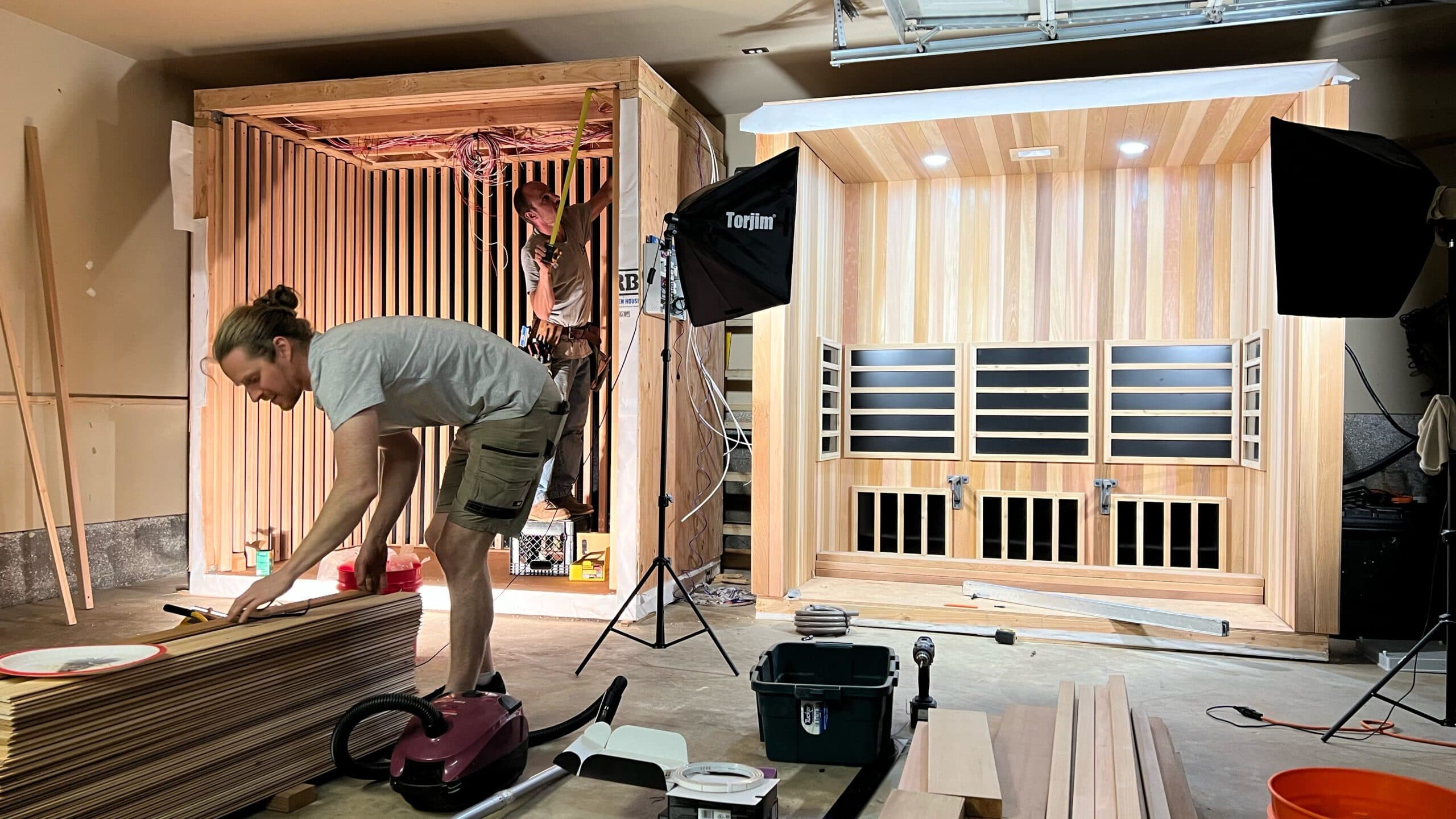
Chris has been designing and building custom infrared saunas since 2014. He wrote one of the first comprehensive books on infrared sauna therapy and is personally involved in every SaunaCloud build — from design consultation through delivery and beyond. His professional expertise is sauna design and construction, not clinical medicine.
Ready to Design Your Sauna?
Every project starts with a conversation. Tell us about your space and we'll create your custom plan — free, no obligation.